Affecting Biomes
Brushes may also affect Biomes (created in our Errant Biomes plugin) by generating masks that can be accessed by Sub-Biomes/Species.
Start by adding a new
Biome Maskentry in a landscape brushSelect the mask asset and texture for that
Biome Mask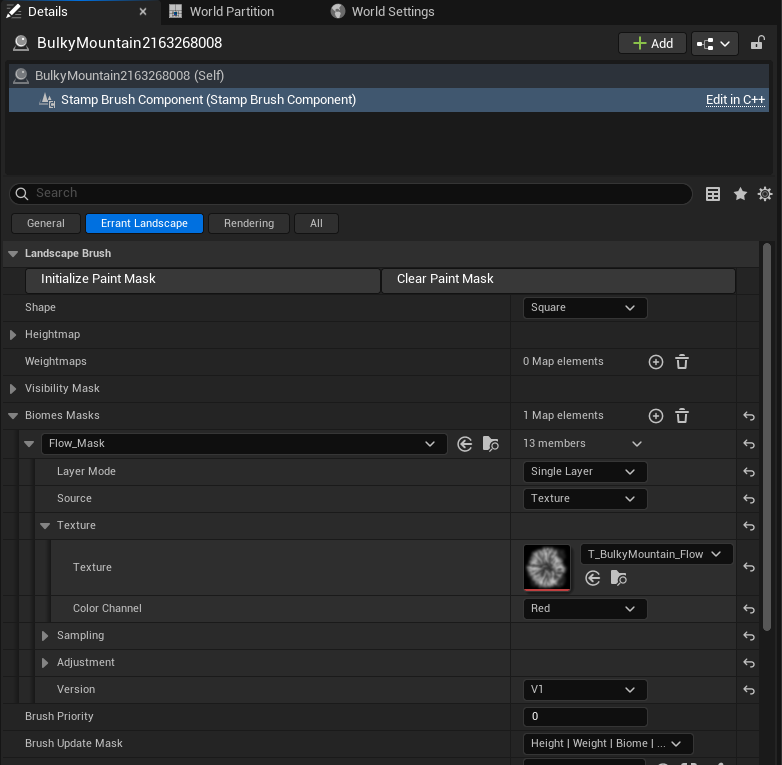
Optionally increase the
Scale Z/Multiplierwhen using a dark texture
Make a Species/Sub-Biome use the newly created
Biome MaskEnter the
Errant Biomeseditor modeOpen the properties of a chosen Species/Sub-Biome
Select one of the Mask Materials (Growth/Asset Group/Scale)
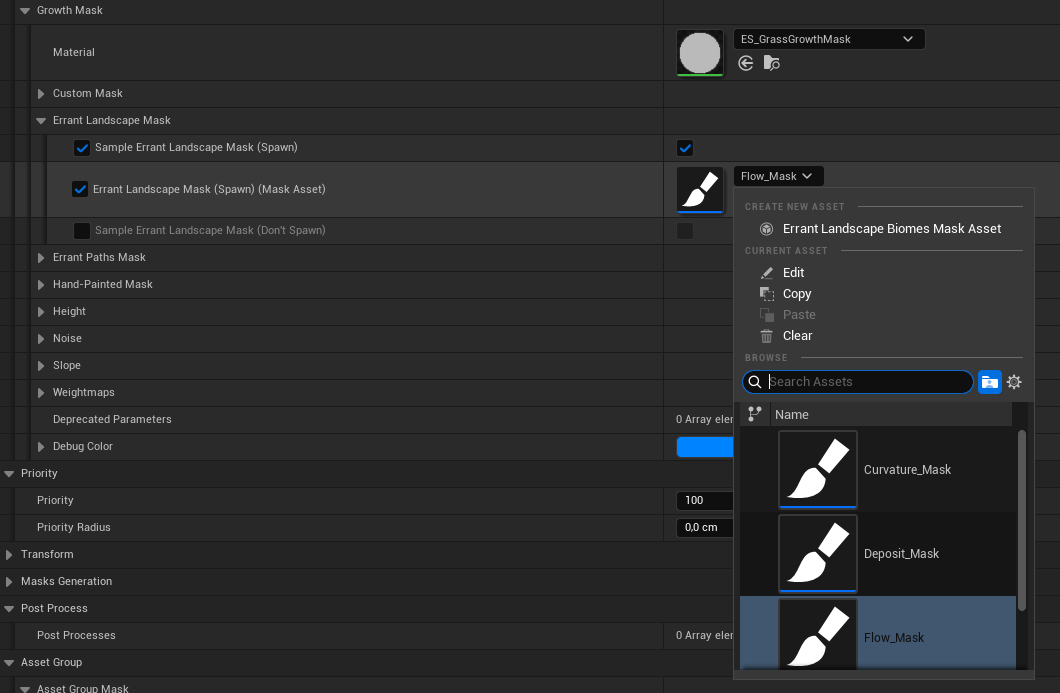
If using the default template material in the Growth Mask:
- enable the
Sample Errant Landscape Mask (Spawn)override - enable
Errant Landscape Mask (Spawn) (Mask Asset)and select the mask asset to use
- enable the
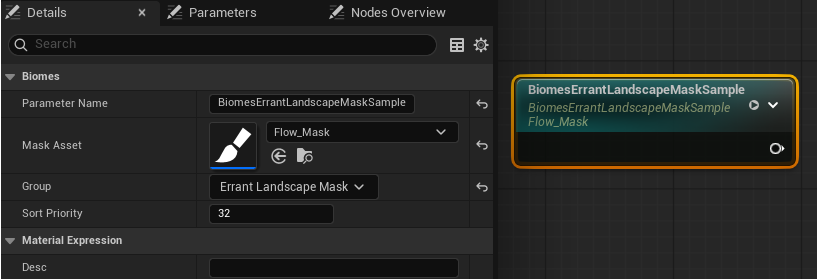
If adding a parameter to an existing material:
add the
BiomesErrantLandscapeMaskSamplenodein Details, select the mask asset
- Regenerate Biomes
- Select some region for regeneration in the
Selecttool - Click the
Generatebutton
- Select some region for regeneration in the
Note that you can use the Biomes Debug tool to investigate the mask of the affected Species/Sub-Biome.
Creating Mask Assets
To create Biomes Mask Asset for use in Errant Landscape brushes follow instructions here and choose Errant Landscape Mask Mask Type.
Visualization
To preview the masks you're working on, navigate to Visualize->Preview and select Biomes Masks.
Biomes Mask Names
Errant Biomes 1.4 introduced Mask Assets, replacing the former practice of using names for mask referencing. You can read more about this change here
All newly created Errant Landscape brushes will default to mask assets. Your older brushes will need to be converted manually.
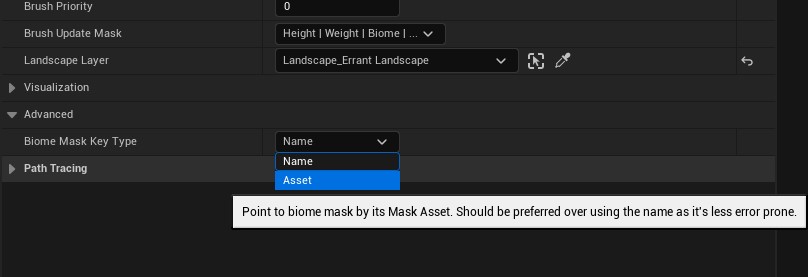
You can change name to the newer asset based key using Biome Mask Key Type property.